
Are you currently thinking of getting a Wharncliffe knife?
This knife, which was indeed named after a British Lord of Wharncliffe (more on him in a bit), is well-known for its rounded spine that tapers toward a point with a straight and flat ground edge.
In the centuries since its introduction in the 1820s, the definition of the Wharncliffe knife has expanded to refer to almost any blade that has a straight edge tapering into a point.
The original intent of the Wharncliffe blade was for carpentry, and specifically for whittling or splitting wood, but as we’ll soon see there are many other uses for this knife as well.
In this guide, we’ll cover where the Wharncliffe knife came from, its strengths and weaknesses, and the primary tasks that you can use it for.
Where Did the Wharncliffe Blade Come From?
Like we mentioned above, the Wharncliffe dates all the way back to the 1820s. The name originally came from the Wharncliffe wood that is commonly present in southern Yorkshire in England, which was where the knife originated.
So how did this knife come to be? The story goes that the first Lord of Wharncliffe (James Archibald Stuart-Wortley-Mackenzie) was enjoying wine with a relative one evening while they were discussing knives, and both expressed displeasure with the lack of development in knife blades in recent years.
As a result, the Lord of Wharncliffe and his relative teamed up to design a new knife blade from the ground up. It just so happened that the Lord was also a supporter of Joseph Rodgers & Son, which was one of the most respected companies in the cutlery business in Great Britain at the time. They took the new blade that the Lord and his relative presented to them and made further improvements.
A few years later, after further refinement and testing, the new type of knife was finalized and released as the ‘Wharncliffe knife’ after the Lord himself.
From the get go, the Wharncliffe blades were intended for carpentry and woodworking, which they were effective at thanks to the straight edge and pointed tip of the blade. Over the course of time, it was discovered that the Wharncliffe could be utilized for many other tasks and applications as well. They became very popular and soon Wharncliffe knives were being used not only all over Europe but in America as well.
So, what exactly made the Wharncliffe knife so successful? Let’s find out.
What Makes the Wharncliffe Knife So Special?
Wharncliffe knives have been so successful because the design of the blade is well-suited for several tasks.
One of the best benefits of the Wharncliffe is how its straight edge gives the user excellent control over the blade. Specifically, you’ll have full control over the angle of the cuts or slices that you make without any wobbling or looseness.
Another benefit of the Wharncliffe is the strength of the blade. This is because the tip at the end of the blade is in direct alignment with the spine of the blade as well, which translates to excellent strength for cutting through tough materials.
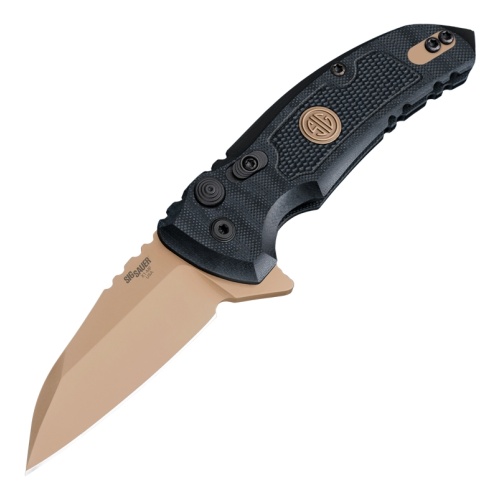
Another advantage to the Wharncliffe is how easy it is to draw in and out of a sheath because of the straightness of the blade. You can easily draw the knife from the sheath in a swift movement to use in an emergency if you need to, and re-sheathing is also smooth.
That all being said, the Wharncliffe knife is not without its disadvantages. Even though the blade of the Wharncliffe is very strong, it’s also not ideal for more delicate work or precision cuts. You’ll want to find a clip-point knife with a thinner blade for this kind of work.
The Wharncliffe is also designed to focus its force on a smaller area when you bring the blade into contact with a surface, and therefore it’s not the best idea for chopping or more ‘heavy duty’ tasks where the full-length of the blade needs to be brought into contact with a surface. For this kind of work you’ll want a wider blade with more weight.
In short, the Wharncliffe knife will offer you excellent control over the blade and is perfect for push cuts over a small area, but it’s not the best choice for precision cuts or chopping.
So with those advantages and disadvantages in mind, which exact tasks is a Wharncliffe knife well-suited for?
How is the Wharncliffe Knife Used Today?
A good way to think of the Wharnclfife is as a versatile ‘middle-of-the-road’ knife that can handle some basic everyday cutting tasks, such as:
- Cutting open boxes, tape, or packaging
- Slicing produce (like fruits and vegetables)
- Cutting ropes, netting, or paracord
- Cutting plastic
- Cutting leather
- Carving, whittling, or splitting wood and basic carpentry work
- Field dressing wild game
That being said, while the Wharncliffe can be an excellent EDC knife for the above kinds of tasks that you may encounter in your everyday life, it’s not the best choice for self-defense.
While many people rely on handguns for self-defense, tightening gun laws in certain jurisdictions means that many people are forced to carry alternative weapons for self-defense, including knives. As versatile as it is, however, the Wharncliffe won’t be the greatest choice for you to carry as a defensive weapon.
Instead, the best type of knife to use for self-defense will be a tactical or combat knife with a wider tip than the Wharncliffe, which is less ideal for creating a deeper cut that a self-defense knife needs. A knife with a serrated blade would be a better choice for defensive purposes as well because the serrations can easily cut through clothing as well.
Nonetheless, the Wharncliffe is still an excellent choice for a functional EDC knife for basic cutting needs like we’ve outlined above. Just make sure that you also carry an additional knife that is intended for self-defense (if you want to carry a defensive knife).
Conclusion
Even though it’s not quite the best choice for self-defense, the Wharncliffe knife is still an excellent choice for a functional knife that will serve you well in your daily life. There’s a reason why it’s been so successful and widely-used for over two hundred years.